2018 Hokkaido Eastern Iburi Earthquake
Event Date :
09-06-2018
Location :
Hokkaido, Japan
Report Date :
03-11-2019
Event Category:
Earthquake,Landslide
EQ Magnitude :
6.6
Report Number:
GEER-060
DOI:
doi:10.18118/G6CM1K
Event Latitude:
42.671
Event Longitude:
141.933
Team:
| Robert Kayen |
Collaborators:
Robert Kayen, Brad Wham, Alex Grant, Mikami Atsushi, Donald Anderson, Paolo Zimmaro, Pengfei Wang, Yi Tyan Tsai, Jeff Bachhuber, Chris Madugo, Joseph Sun, Chris Hitchcock, and Matthew Motto
Summary:
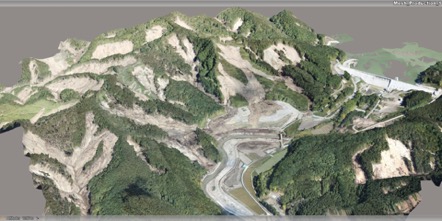
The 2018 Hokkaido Eastern Iburi MW6.6 earthquake struck the southern coast of the north island of Japan in the early morning (3:08 AM JST) on September 6, 2018. The event had a hypocentral depth of 35 km, centered beneath the port city of Tomakomai. Extremely strong shaking with peak ground acceleration in excess of 0.5 g was felt in the communities directly north of Tomakomai, in the districts of Abira and Atsuma. There, a very high density of landslides occurred in pumices soil that affected the majority of slopes in the region above the floodplain. These landslides were typically a thin veneer of 1 to 3 m of recent (<9000 ybp) volcanic pumice mantling older Kawabata marine sedimentary rocks. The source of the pumice layers are recent eruptions from Mt. Tarumae, south of Shikotsu-ko Caldera lake. Several block megaslides were observed in the Kawabata marine unit. A flow failure resulting from soil collapse or liquefaction was observed in fill deposits placed in a residential community district of Kiyota ward in Sapporo. The community, Satozuka-1 is situated on a natural steep ravine that was filled with pumice soil to level construction area to a gently sloping landscape for housing construction. The flow failure consisted of lateral migration of soil from the upper slope regions of the community onto the surface of the lower community. The upper community topographically deflated as large quantities of fluidized soil flooded the lower streets.
File Upload :
| File Title | File Version | File Date | File Type |
|---|---|---|---|
| Full Report | Version 1 | 05-13-2019 |
PDF
|
The work of the GEER Association, in general, is based upon work supported in part by the National Science Foundation through the Geotechnical Engineering Program under Grant No. CMMI-1266418. Any opinions, findings, and conclusions or recommendations expressed in this material are those of the authors and do not necessarily reflect the views of the NSF. The GEER Association is made possible by the vision and support of the NSF Geotechnical Engineering Program Directors: Dr. Richard Fragaszy and the late Dr. Cliff Astill. GEER members also donate their time, talent, and resources to collect time-sensitive field observations of the effects of extreme events.